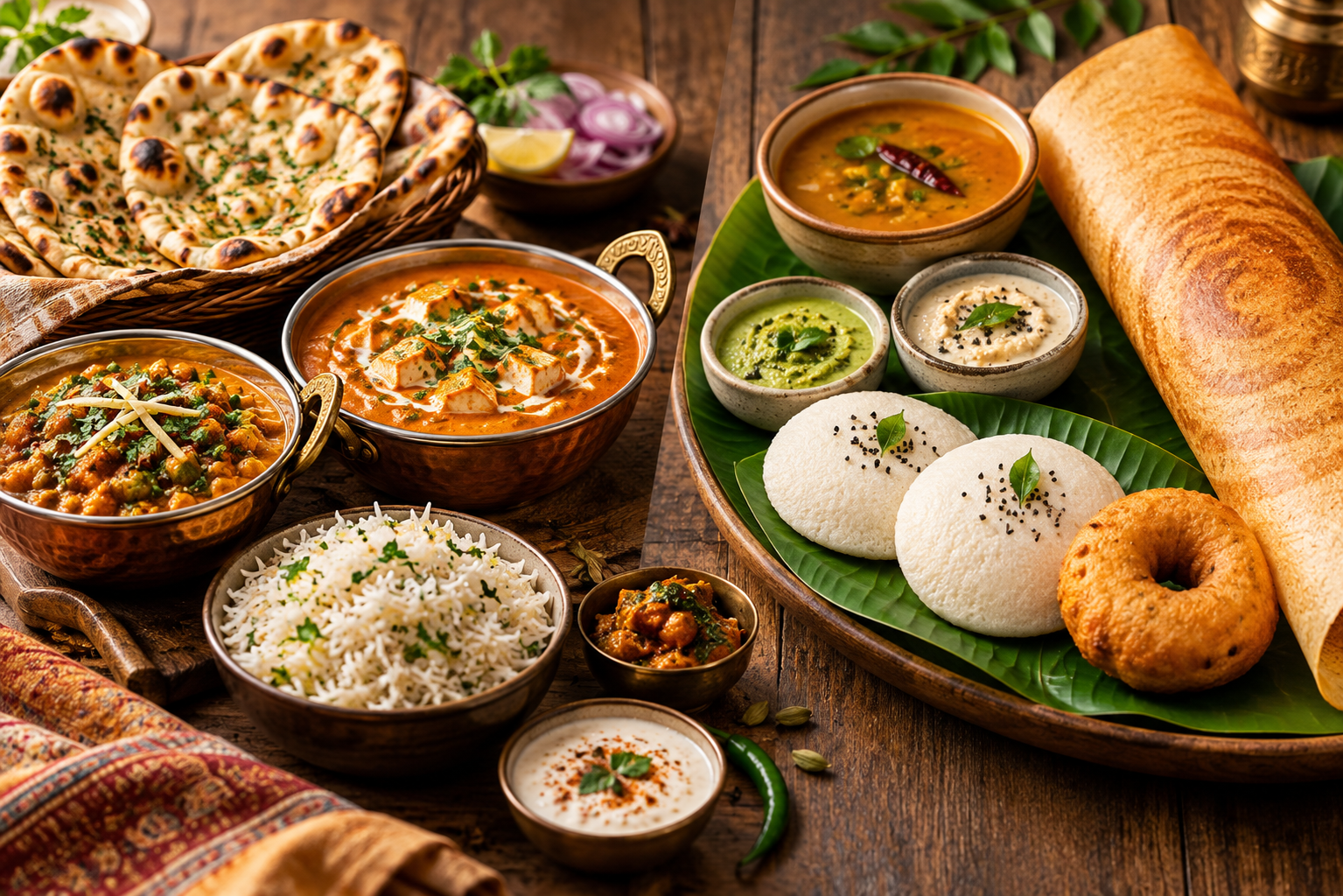
Indian cuisine is not defined by one cooking style, a particular spice blend, or a single way of preparing food. Across India, regional traditions have developed through local ingredients, climate, cultural practices, and generations of family cooking.
For people exploring Indian Food Traditions in Plano, TX, understanding the differences between North Indian and South Indian cuisine can make choosing a vegetarian meal more interesting. Both traditions use familiar ingredients in different ways, creating distinct flavors, aromas, and textures.
Whether you enjoy rich, slow-cooked preparations or lighter meals with tangy flavors, learning about these two culinary traditions helps you discover what suits your taste.
Why Does Indian Food Taste Different Across Regions?
Indian food varies across regions because local agriculture, climate, cultural traditions, and cooking techniques influence the ingredients and flavors people use. Northern and southern Indian cooking share many spices and vegetables, but their approaches to preparing meals can differ considerably.
India’s food culture has developed over centuries, shaped by regional communities and locally available ingredients.
In many northern regions, wheat plays an important role in everyday meals. Across much of South India, rice is a major staple.
These differences influence how meals are prepared and served. Regional preferences also affect the use of dairy, fermented ingredients, lentils, and aromatic spices.
For diners researching Indian Food Traditions in Plano, TX, understanding these influences provides useful context before exploring an Indian vegetarian restaurant.
Rather than thinking of Indian cuisine as one category, it helps to recognize the variety that exists within it.
Understanding North Indian Vegetarian Cooking
North Indian vegetarian cuisine is known for its diverse cooking techniques, warming spices, wheat-based preparations, and different styles of gravies.
However, not every North Indian preparation is rich or creamy. Many traditional everyday meals use simple ingredients and carefully balanced seasonings.
The Role of Slow Cooking
Slow cooking is an important method in several North Indian culinary traditions.
Ingredients are heated gradually, allowing their natural flavors to blend with spices and other seasonings.
This process can create smooth textures, deeper aromas, and a well-rounded taste.
How Aromatic Spices Create Flavor
North Indian cooking frequently uses spices such as cumin, coriander, turmeric, and cardamom.
Some spices contribute warmth, while others provide earthy, sweet, or gently citrus-like notes.
The timing of adding these seasonings influences the final flavor.
For someone searching for North Indian food in Plano, TX, learning about these characteristics can help identify suitable vegetarian preparations.
The appeal of North Indian cuisine comes from its balance of familiar ingredients and distinctive cooking techniques.
Exploring South Indian Vegetarian Traditions
South Indian vegetarian food includes a wide range of traditions influenced by Tamil Nadu, Karnataka, Kerala, Andhra Pradesh, and Telangana.
Although these regions share certain ingredients, each has developed different seasoning methods and flavor preferences.
Why Fermentation Matters
Fermentation is one of the interesting techniques associated with South Indian cooking.
It is a natural process in which microorganisms transform ingredients over time.
In traditional food preparation, fermentation can change texture, introduce tanginess, and influence how ingredients behave during cooking.
This technique demonstrates how simple ingredients can produce complex results without depending on elaborate seasoning.
The Importance of Tempering
Tempering involves briefly heating spices and aromatic ingredients in oil or ghee.
The heat helps release flavors and aromas before the seasoning is combined with other ingredients.
Mustard seeds, curry leaves, and certain lentils are commonly associated with South Indian tempering techniques.
Diners exploring a South Indian Restaurant in Plano, TX may notice how these methods create distinctive aromas and contrasting flavors.
Understanding these techniques adds another dimension to Indian food traditions in Plano.
North vs. South: How Do the Flavors Compare?
North Indian vegetarian cooking often emphasizes wheat-based foods, aromatic gravies, and warming spices, while many South Indian traditions highlight rice, lentils, tangy flavors, and distinctive tempering methods.
These differences are general patterns rather than fixed rules, as both regions contain diverse culinary traditions.
Common Staples
North Indian traditions frequently include wheat-based foods alongside rice. South Indian traditions commonly feature rice and lentils in everyday meals.
Flavor Profiles
North Indian dishes may feature earthy, aromatic, and sometimes creamy flavors. South Indian preparations often highlight tangy, savory, and aromatic combinations.
Cooking Methods
Slow cooking, roasting, and sautéing are associated with various North Indian preparations. Steaming, fermentation, and tempering play important roles in many South Indian traditions.
Common Ingredients
Wheat, dairy, vegetables, and legumes are widely used in North Indian cuisine. Rice, lentils, coconut, and tamarind appear frequently in South Indian cooking.
Textures
North Indian meals may include soft breads and different styles of gravies. South Indian cuisine offers fermented preparations and a wide range of contrasting textures.
Neither style is automatically spicier or heavier than the other.
Spice levels depend on the specific region, recipe, and preparation method.
Some South Indian preparations are mild, while others have pronounced heat. The same is true of North Indian cooking.
For people comparing Indian vegetarian food in Plano, these differences provide a practical starting point when reviewing restaurant menus.
How Spices and Cooking Methods Shape Regional Food
A major strength of Indian vegetarian cuisine is the ability to create different flavors using familiar ingredients.
The same vegetable or lentil can develop a completely different character depending on how it is cooked.
For example, roasting an ingredient can create a deeper, slightly nutty aroma.
Slow simmering allows seasonings to blend gradually, producing a softer and more unified flavor.
Tempering adds a distinct aromatic layer, often toward the beginning or end of preparation.
Texture also influences the dining experience.
Crisp and soft elements can complement each other, while creamy preparations can contrast with foods that have a firmer consistency.
Another important detail is the difference between spice and heat.
Not every aromatic spice creates a burning sensation. Many contribute fragrance, warmth, or gentle sweetness.
This is useful knowledge for diners who want to explore regional Indian cuisine but prefer moderate spice levels.
These cooking principles help explain why Indian food traditions offer so much variety within vegetarian cuisine.
Experiencing Regional Indian Cuisine at Malgudi Garden
Understanding regional cuisine becomes more useful when diners can connect these traditions with local restaurant options.
Malgudi Garden is a pure vegetarian Indian restaurant located at , Plano, TX ..
The restaurant introduces diners to North Indian and South Indian vegetarian cuisine, making it a relevant destination for exploring different regional food traditions.
Its vegetarian focus also makes it suitable for people who prefer a menu built around meat-free preparations.
Those interested in Indian Food Traditions in Plano, TX can explore Malgudi Garden’s food offerings to discover preparations influenced by different regions of India.
Malgudi Garden provides a local example of how regional Indian food traditions can be introduced to diners with different preferences.
How to Choose Between North and South Indian Food
Choosing between North Indian and South Indian food depends on your preferred flavors, textures, cooking styles, and dietary requirements.
Diners who enjoy certain slow-cooked gravies may prefer some North Indian preparations, while those interested in fermented foods and tangy seasonings may enjoy exploring South Indian traditions.
These preferences should guide the decision rather than the assumption that one regional cuisine is better than another.
If You Prefer Rich, Rounded Flavors
Consider exploring preparations that use slowly cooked ingredients and carefully blended spices.
Ask about current menu options with mild or moderately seasoned gravies.
If You Enjoy Tangy and Aromatic Flavors
Look for preparations influenced by fermentation, tamarind, or traditional tempering techniques.
These approaches can introduce different flavor combinations.
If You Are Dining With Family
Discuss spice preferences and dietary requirements before choosing.
Sharing different vegetarian preparations, when suitable, may allow everyone to experience more than one cooking style.
These considerations make exploring Indian Food Traditions in Plano, TX easier for first-time visitors and experienced diners alike.
What Makes Regional Vegetarian Dining Interesting in Plano?
Plano’s Indian dining options allow people to explore culinary traditions that originated in different parts of India.
For families familiar with regional Indian cooking, certain flavors may connect with food traditions they grew up enjoying.
For first-time visitors, regional cuisine introduces ingredients and techniques that may be less familiar.
A weekday lunch might call for a straightforward meal, while weekend dining can provide more time to compare cooking styles and discover new preferences.
For groups with different tastes, understanding the menu’s regional influences can help with ordering decisions.
Vegetarian food is particularly interesting because its variety comes from the ingredients and cooking techniques themselves.
Restaurants such as Malgudi Garden contribute to this dining landscape by focusing on pure vegetarian dining in Plano, TX and introducing guests to different regional Indian food traditions.
Frequently Asked Questions
1. What is the main difference between North and South Indian food?
North Indian food often includes wheat-based preparations and aromatic gravies. South Indian cooking frequently uses rice, lentils, fermentation, and tempering. Both regions offer diverse vegetarian traditions.
2. Is South Indian food always spicier than North Indian food?
No. Spice levels vary by region and preparation. Both North and South Indian cuisines include mild and spicy options. Ask about seasoning before ordering.
3. Does Malgudi Garden offer North and South Indian cuisine?
Yes. Malgudi Garden offers North Indian and South Indian vegetarian food options. Guests can explore the restaurant’s offerings to discover different regional flavors and preparations.
4. Where can I explore Indian vegetarian food in Plano, TX?
Malgudi Garden is a pure vegetarian Indian restaurant in Plano. Its focus on vegetarian cuisine makes it a relevant choice for diners interested in experiencing different Indian food traditions.
Discovering More Through Regional Indian Food
North Indian and South Indian cuisines demonstrate how geography, culture, and cooking techniques influence vegetarian food.
From different uses of grains to distinctive seasoning methods, both traditions offer valuable insights into India’s culinary diversity.
For diners discovering Indian Food Traditions in Plano, TX, understanding these differences can make choosing a meal more enjoyable and informed.
Malgudi Garden contributes to the city’s Indian vegetarian dining options through its pure vegetarian focus and regional food offerings.
Exploring these food traditions is not simply about selecting a meal. It is an opportunity to appreciate the ingredients, techniques, and cultural knowledge that continue to shape Indian cooking.